MVSep Pedal Steel Guitar
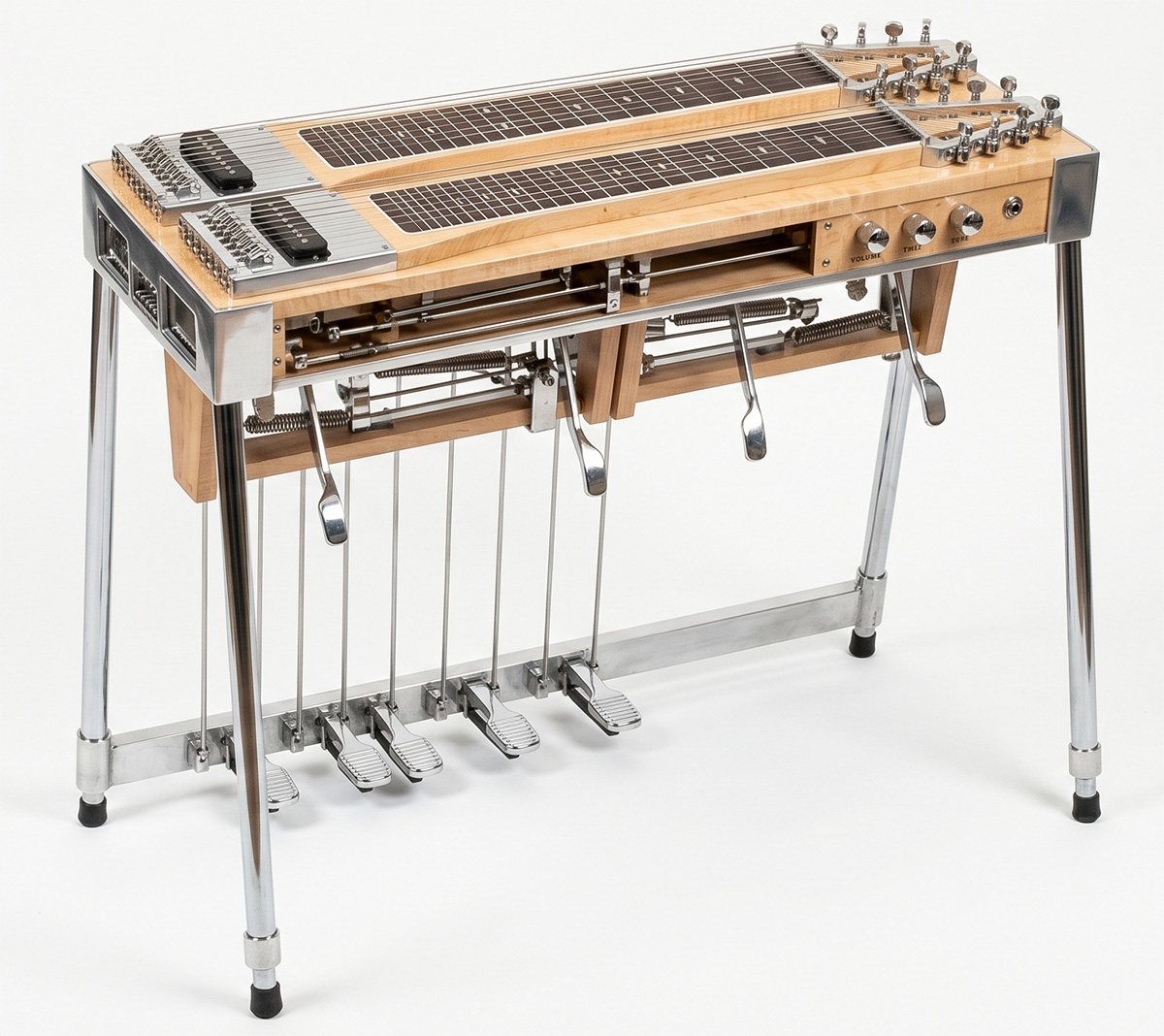
Pedal steel guitar is a type of electric guitar mounted on a special horizontal stand (console). The musician plays it while seated, using not only their hands, but also their feet and knees.
Key features of the instrument:
-
Pedal and lever mechanism: This is the instrument’s main distinguishing feature. A system of foot pedals and knee levers mechanically changes the tension (and pitch) of specific strings during performance. This allows the player to perform complex harmonic transitions and change chords without moving the hand along the neck.
-
Playing technique: A pedal steel guitar has no traditional frets to press with the fingers. With the left hand, the guitarist smoothly glides a heavy metal bar (slide or “steel”) across the strings, creating the characteristic sliding effect (glissando). The right hand plucks the strings using a plastic thumb pick and metal finger picks on the remaining fingers.
-
Necks and strings: Professional models often feature two parallel necks with different tunings (for example, E9 for country music and C6 for jazz and swing). Each neck usually has 10 or 12 strings.
The instrument is famous for its sustained, singing, and often “crying” tone with very long sustain. Historically and culturally, the pedal steel guitar is strongly associated with country music and western swing. However, thanks to its unique expressive capabilities, today it can be heard in a wide variety of genres, from jazz and Hawaiian music to ambient, indie rock, and pop music.